

“Five Divine Rules for a Liberated People: Lessons from Sura 6:151”

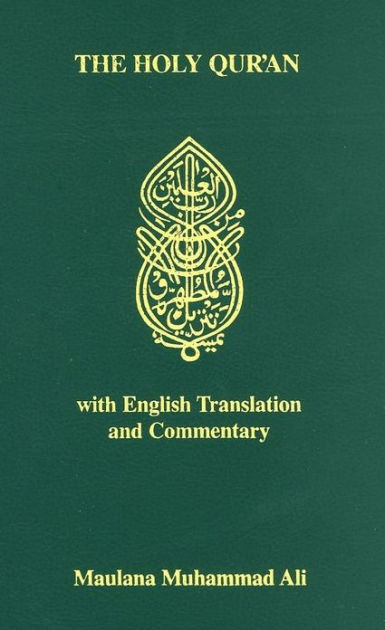
“Say: Come, I will recite what your Lord has forbidden to you: Associate not anything with Him and do good to parents, and slay not your children for (fear of) poverty — We provide for you and for them — and draw not nigh to indecencies, open or secret, and kill not the soul which Allah has made sacred except in the course of justice. This He enjoins upon you that you may understand.” Maulana Muhammad Ali translation
There is something striking about the final phrase of this verse: that you may understand. God does not say “that you may obey.” He says that you may think. This single verse, revealed over fourteen centuries ago in the scorching landscape of seventh-century Arabia, lands in the modern world with the force of an ethical manifesto. It is not a list of rules so much as a map of human dignity — a distillation of what it means to be a person in relationship with the divine, with family, with society, and with yourself.
Let’s pull it apart.
A Narrative Rendering
The verse begins with a call—firm, urgent, almost ceremonial: Come. It is as if a voice gathers the people into a circle, inviting them to step closer, to listen with their whole being. In that gathering, the message is not merely recited; it is revealed as a blueprint for cultural survival.
In the Afrikan World Art Gallery, surrounded by masks that carry ancestral memory, textiles woven with centuries of meaning, and paintings that testify to both suffering and brilliance, this ancient call feels startlingly present. It speaks into the room with the authority of a divine manifesto for any people striving to reclaim their identity, protect their children, and build a just society.
The verse lays out five pillars—simple in form, immense in consequence. They are not abstract doctrines. They are survival strategies.
The First Pillar: Oneness
The narrative begins with a command that centers the soul: Set up no partner with Him.
In a world that constantly tries to make Black people bow to lesser gods—consumerism, assimilation, self-doubt—this is a call to reclaim the center of the self. It is a declaration of mental sovereignty. It whispers through the gallery walls:
Do not let anything smaller than the Creator define you.
Every carved figure, every ancestral symbol, every piece of Afrikan art becomes a witness to this truth. Oneness becomes a shield against fragmentation, confusion, and spiritual colonization.
The Second Pillar: Honoring Parents
Then the narrative shifts from the divine to the intimate: Do good to parents.
This is not merely about family. It is about lineage, memory, and cultural inheritance. It is Sankofa—reaching back to fetch what was lost. It is refusing to let a society built on erasure convince you that your elders are disposable.
In the gallery, this principle becomes a curriculum:
Know your story. Know your people. Know your inheritance.
Every artifact becomes a teacher, every exhibit a reminder that we stand on the shoulders of those who endured.
The Third Pillar: Courage for the Next Generation
The story deepens: Nor kill your children for fear of poverty—We provide for you and for them.
This is a direct confrontation with the pressures placed on Black families—economic, psychological, systemic. It challenges the lie that survival requires shrinking your dreams.
In the community, this becomes a rallying cry:
Invest in the children. Protect their imagination. Guard their potential.
Fear cannot be the architect of our future.
The Fourth Pillar: Moral Discipline
The narrative then turns inward: Nor go near indecencies, open or secret.
The verse does not merely forbid wrongdoing—it forbids approaching it. It understands how communities decline: not through sudden collapse, but through small compromises.
In the gallery, this becomes a reminder that culture shapes character.
What we celebrate, normalize, or tolerate becomes the soil in which our children grow.
This is a call to cultural hygiene, to guard the gates of the soul.
The Fifth Pillar: Justice
Finally, the verse speaks to the sacredness of life: Nor kill the soul which Allah has made sacred except in the course of justice.
For a people who have endured centuries of violence, this is both a healing and a mandate. It affirms:
Your life is sacred. Your neighbor’s life is sacred. Your community’s life is sacred.
Justice is not a political slogan—it is a divine requirement.
In classrooms and community circles, this becomes a framework for teaching ethics, conflict resolution, and accountability.
How the Verse Lives in the Gallery
In Afrikan World Art Gallery, these five pillars are not theoretical. They become:
• a philosophy of cultural self-respect
• a guide for community-building
• a moral foundation for youth programs
• a spiritual lens for interpreting art
• a reminder that liberation begins with inner order
The verse is not simply recited—it is embodied in the way the gallery curates, teaches, uplifts, and protects its people.
Closing Narrative
Sura 6:151 is not a list of restrictions. It is a roadmap for dignity. It is a divine strategy for any people seeking to rise, rebuild, and reclaim their rightful place in the world.
It teaches that a strong community begins with clarity of worship, gratitude for lineage, courage in the face of fear, discipline of character, and commitment to justice.
These are the rules of life.
These are the rules of survival.
These are the rules of liberation.
Visit us at www.afrikanworldart.com